

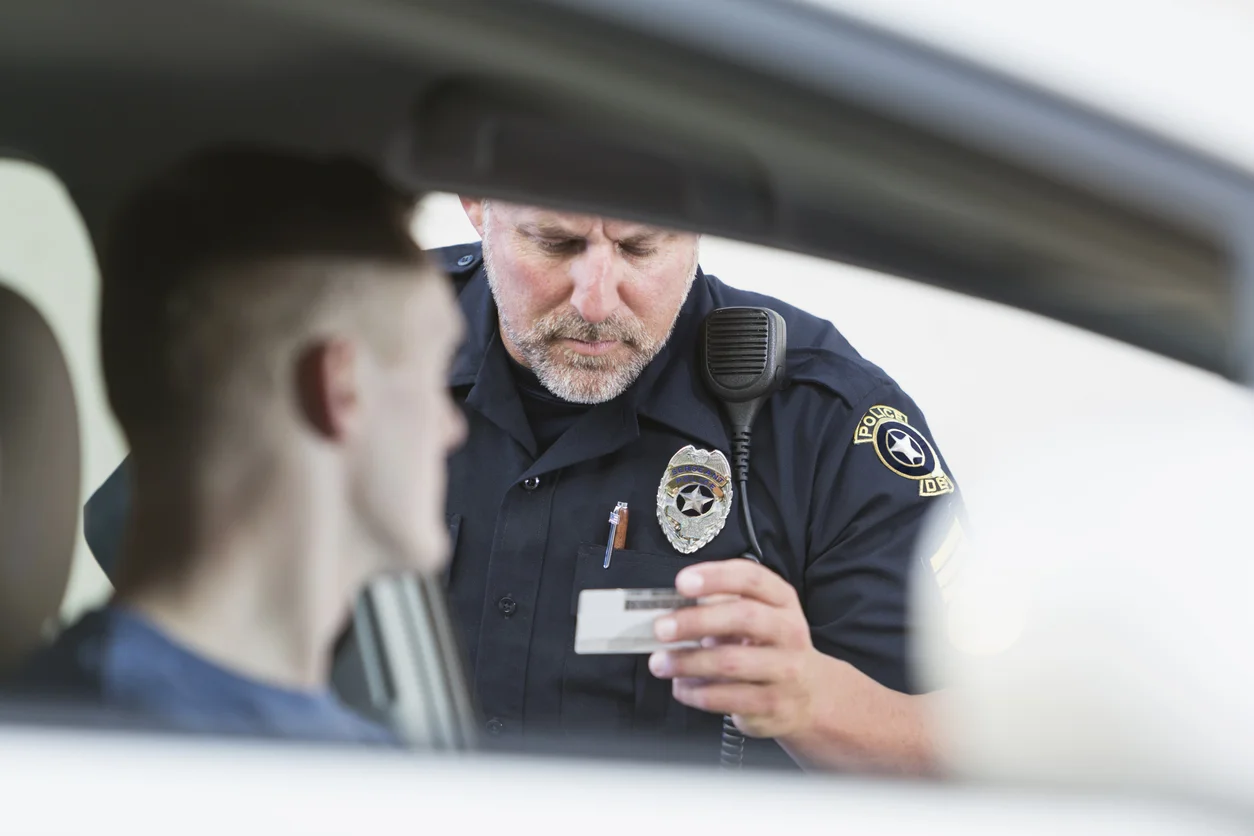
Encounters with law enforcement can be stressful and confusing, and one of the most common questions people have in those moments is: do I actually have to show my ID?
Many people assume the answer is always yes. In reality, your obligation to identify yourself to a police officer in Texas depends on the specific circumstances of the interaction. Whether you're behind the wheel, being detained, or under arrest makes a difference, and understanding those distinctions could matter more than you think.
Texas Failure to ID Statute
Your obligation and your limits when it comes to identifying yourself to law enforcement are governed by Texas Penal Code Section 38.02, commonly known as the Failure to ID statute. This law draws important distinctions based on whether you've been arrested, detained, or are operating a motor vehicle, and it treats the refusal to identify yourself very differently from providing false information.
If You've Been Lawfully Arrested
Under Section 38.02(a), if you have been lawfully arrested, you are required to provide your name, residence address, and date of birth to the officer upon request. Refusing to do so is a Class C misdemeanor, which carries a fine of up to $500.
One important nuance here: "lawfully arrested" doesn't necessarily mean you've been handcuffed and formally told you're under arrest. Courts have consistently held that whether an arrest has occurred must be evaluated on a case-by-case basis, looking at the totality of the circumstances. That ambiguity is exactly why having an attorney who understands how courts interpret these situations is so valuable.
Providing False Information
Section 38.02(b) makes it an offense to provide a false or fictitious name, residence address, or date of birth to a peace officer who has:
- Lawfully arrested you;
- Lawfully detained you; or,
- Good cause to believe you are a witness to a criminal offense.
Notice that this subsection applies in more situations than the arrest-only rule, but it's also narrower in a specific way: it applies to providing false information, not simply to refusing to provide information at all. That's a distinction that is frequently misunderstood, both by individuals trying to assert their rights and, in some cases, by officers in the field.
An offense under this section is a Class B misdemeanor, with a potential penalty of up to 180 days in jail and a fine of up to $2,000.
If You're Operating a Motor Vehicle
Section 38.02(b-1) addresses interactions between law enforcement and drivers specifically.
If you are lawfully detained during a traffic stop, you are required to:
- Provide or display your driver's license upon the officer's request; and,
- Furnish your name, driver's license number, residence address, and date of birth if the officer asks for that information.
In other words, if you're behind the wheel and pulled over, you don't have the same latitude to decline identification that you might have in other contexts. This is a Class C misdemeanor if violated, carrying a fine of up to $500.
What Texas ID Laws Mean for the Average Person
Your obligation to identify yourself under Texas law is not one-size-fits-all. It hinges on whether you've been lawfully arrested, lawfully detained, or are operating a vehicle, and those distinctions matter enormously. Critically, whether a detention or arrest was actually lawful is a legal argument that belongs in a courtroom, not on the side of the road. Attempting to argue those points in the moment is unlikely to help you and could make your situation worse.
The smart move? Comply in the moment, document everything you can, and let your attorney fight the legal battle where it counts.
Facing a Failure to ID Charge? We Can Help.
At Cofer & Connelly, PLLC, we understand situations involving the police and ID requests can happen fast, and that the law surrounding them is far more nuanced than most people realize. Let us analyze the facts of your case, examine whether any detention or arrest was truly lawful, and fight to protect your rights every step of the way. Whether your charge is a Class C misdemeanor or something more serious that grew out of the same encounter, we're here to defend you.
Call us at (512) 991-0576 to get an initial consultation. We protect the rights of people across Texas.